
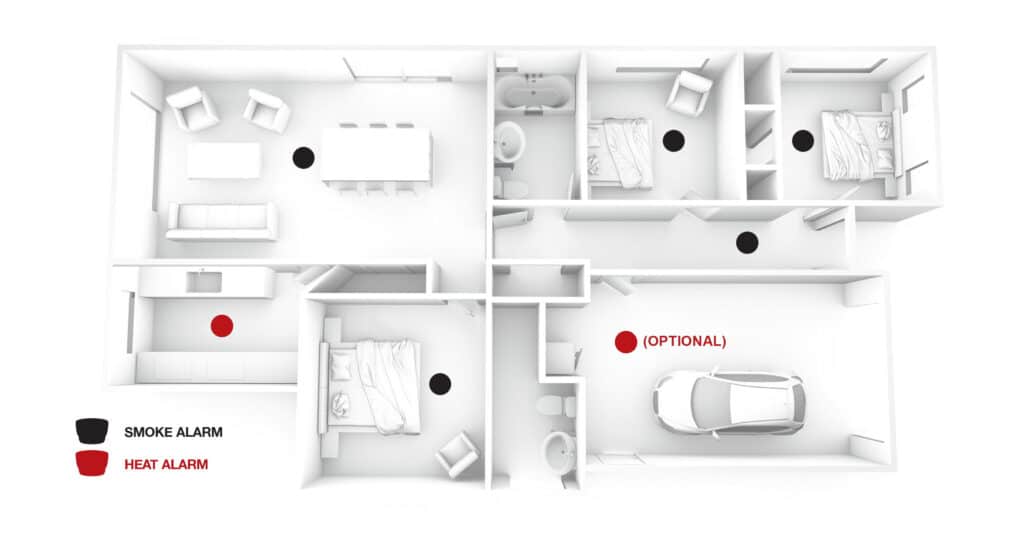
Choosing the right type of alarm for each room in your home is essential. While smoke alarms are the standard for fire detection in bedrooms and living spaces, some areas—like kitchens, laundries, or garages—are better suited to heat alarms.
In this guide, we’ll explain the difference between the two, when to use a heat alarm vs a smoke alarm, and how to make sure your fire protection system meets New Zealand safety recommendations.
What’s the Difference Between Smoke and Heat Alarms?
Smoke Alarms
- Detect airborne smoke particles
- Use photoelectric technology to sense smouldering or slow-burning fires
- Ideal for bedrooms, hallways, living areas
- Can be triggered by cooking fumes or steam if placed too close to kitchens or bathrooms
Heat Alarms
- Detect a rise in temperature (typically around 58°C)
- Don’t react to smoke or steam
- Designed for areas where smoke alarms would trigger false alerts
- Ideal for kitchens, bathrooms, laundries, garages, and workshops
Both types of alarms can save lives—but using them in the wrong setting can lead to frequent false alarms, missed threats, or unnecessary frustration.
When to Use a Smoke Alarm
Smoke alarms are required by law in New Zealand homes, and should be installed:
- In every bedroom
- In hallways or corridors outside sleeping areas
- In living rooms, lounges, and dining spaces
- On every level of a multi-storey home
Photoelectric alarms are especially effective at detecting the type of fires that start slowly—like smouldering upholstery or electrical faults.
For most parts of the house, a photoelectric smoke alarm is your best option.
When to Use a Heat Alarm
Heat alarms are not legally required, but are highly recommended in:
- Kitchens, where cooking fumes can cause nuisance smoke alarms
- Garages, where vehicle exhaust and tools may create smoke or dust
- Laundries, where dryers can overheat and generate steam
- Bathrooms, where hot showers produce heavy steam
These spaces often cause false alarms if a smoke detector is installed. A heat alarm offers reliable fire detection in these conditions without reacting to harmless vapour or mist.
View our Cavius Heat Alarms for kitchen and utility room protection.
Should You Have Both?
Yes—most NZ homes benefit from a combination of smoke and heat alarms, each installed in the appropriate location.
For example:
- Smoke alarms in bedrooms and hallways ensure you’re alerted to fires while sleeping
- Heat alarms in the kitchen or garage catch fires that might otherwise go undetected (or trigger false alerts if using smoke alarms)
Many modern systems allow both alarm types to be interconnected, so if a heat alarm goes off in the garage, all other alarms in the home will also sound.
If you’re using a wireless system like the Cavius Wireless Family, you can easily link your smoke and heat alarms for whole-home protection.
Can You Replace a Smoke Alarm With a Heat Alarm?
No—not in living areas or bedrooms. Heat alarms are not a substitute for smoke alarms where smoke is the most likely early indicator of fire. They simply detect different things.
Use each type of alarm where it performs best:
- Smoke alarm for early smoke detection in sleeping and communal areas
- Heat alarm for high-moisture or high-fume spaces where smoke detection is impractical
Choosing the Right Alarm Setup for Your Home
Here’s a quick placement guide:
- Smoke Alarms: Bedroom, Hallways, Living Room
- Heat Alarms: Kitchen, Bathroom, Laundry Room, Garage
If you’re unsure about your layout or want peace of mind, speak to a certified alarm installer or consult Fire and Emergency NZ guidelines.
Final Thoughts
When deciding between a heat alarm and a smoke alarm, the key is understanding the environment where it will be installed. Bedrooms and hallways should always have smoke alarms, while kitchens, laundries, and garages are safer with heat alarms that won’t react to steam or fumes.
To build a complete, reliable alarm system for your home, browse the Cavius NZ heat alarm range or explore our full selection of smoke alarms.