
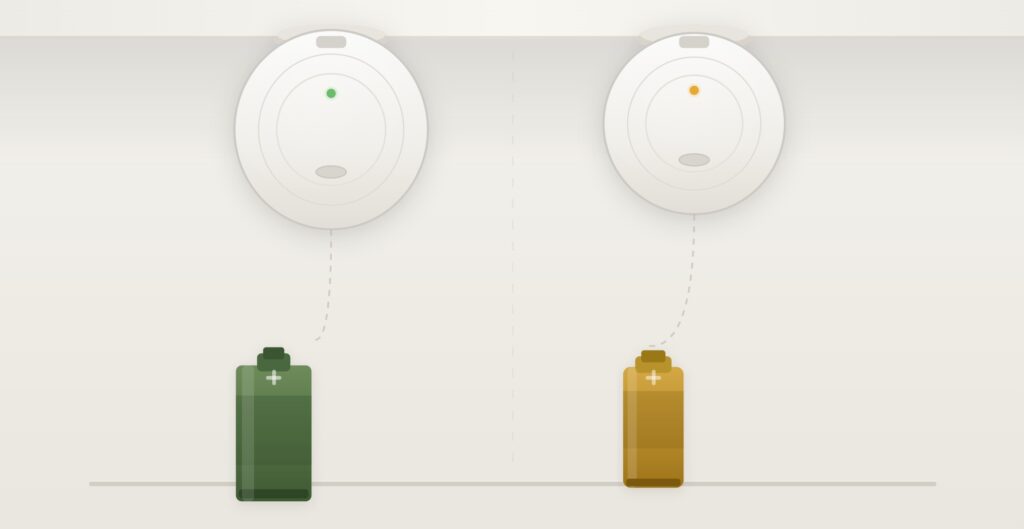
When it comes to smoke alarm batteries, not all options are equal. Walk into a hardware store and you will find alarms that take replaceable AA or 9V batteries sitting alongside sealed units with 10-year built-in batteries. The price difference can be significant, and it is not always obvious what you are actually paying for.
Understanding the difference matters for two reasons: ongoing maintenance and reliability. The battery type you choose directly affects how often you need to service your alarms, and in some cases, whether your alarm will meet current New Zealand building code requirements.
How Standard Replaceable Battery Alarms Work
Standard smoke alarms are powered by a replaceable 9V alkaline battery or, in some older models, AA batteries. These batteries typically last 12 months under normal operating conditions before they need replacing.
When the battery runs low, the alarm emits a periodic chirping sound, usually once every 30 to 60 seconds. This is designed to alert you to replace the battery promptly.
The practical reality is that many homeowners do not replace batteries when the chirping starts. Some remove the battery to silence the noise and forget to replace it. Others simply do not hear the warning if the alarm is in a less-used part of the home. This is one of the leading causes of smoke alarms failing to activate in a fire.
How 10-Year Sealed Battery Alarms Work
Long-life smoke alarms contain a sealed lithium battery that is engineered to power the alarm continuously for 10 years. The battery and alarm are manufactured as a single integrated unit. When the alarm reaches the end of its 10-year lifespan, the entire unit is replaced rather than the battery.
This design addresses the most common point of failure in smoke alarm maintenance: people not replacing batteries. With a sealed unit, there is no battery to remove, no annual replacement schedule to remember, and no risk of the alarm sitting dormant on a shelf with no power.
At the 10-year mark, the alarm will chirp and signal that the entire unit needs replacing. This also aligns with the recommended replacement interval for smoke alarms generally, as sensor sensitivity degrades over time regardless of battery type.
Which Type Is Required Under the NZ Building Code?
The updated NZ Building Code (NZS 4514:2021) does not mandate a specific battery type. Both replaceable and sealed long-life batteries are compliant, provided the alarm itself meets the required performance standards. However, the Building Code does specify that alarms must be operational and maintained. For practical compliance, 10-year sealed battery alarms are the lower-risk option. You can review the full placement and compliance requirements on our NZ Building Code page.
For rental properties in particular, 10-year sealed alarms offer landlords greater confidence that alarms will remain powered between tenancy inspections. Under the Residential Tenancies Act, landlords are responsible for ensuring smoke alarms are working at the start of each tenancy. A sealed battery alarm removes one significant variable from that obligation.
The Real Cost Comparison
A standard battery alarm typically costs less upfront than a 10-year sealed unit. But when you factor in annual battery replacements over a decade, the cost difference narrows considerably.
Consider a home with six smoke alarms:
- Standard alarms: Lower unit cost, but 9V batteries replaced annually across six units over 10 years represents a meaningful ongoing expense, plus the time and effort involved
- 10-year sealed alarms: Higher upfront cost, but zero battery replacements over the same period
- Sealed units also reduce the risk of an alarm being left without power, which carries its own cost if a fire
When viewed over the full product lifespan, 10-year sealed alarms are often comparable in total cost and substantially lower in maintenance burden.
Mains-Powered Alarms: A Third Option
It is worth noting that battery-operated alarms are not the only choice. Mains-powered smoke alarms draw their primary power from your home’s 230V electrical supply, with a backup battery that activates in the event of a power outage.
Mains-powered alarms are commonly installed in new builds and renovations. They are particularly suited to properties where hardwiring is already in place. Our mains powered smoke alarms include options that integrate fully with the CAVIUS wireless interconnected system, so a mains-powered alarm can trigger battery-operated alarms throughout the home simultaneously.
What to Look for in a Long-Life Alarm
Not all 10-year alarms are built to the same standard. When selecting a long-life smoke alarm, look for:
• Genuine 10-year lithium battery with end-of-life warning
• Compliance with AS 3786:2014 or BS EN 14604 and NZS 4514:2021
• Photoelectric detection technology (recommended for NZ homes)
• Wireless interconnection capability if you are installing multiple alarms
• A hush/silence function for temporary suppression during cooking
• Clear manufacturing date and expiry date on the unit
CAVIUS 10-year battery smoke alarms meet all of these requirements. The range includes both standard and recessed ceiling options. You can view the full selection on our battery operated smoke alarms, or read our guide on how long smoke alarms last for more on when to replace your alarms.
Key Takeaways
The choice between a standard and long-life battery smoke alarm comes down to reliability and maintenance commitment. For most NZ homeowners, the 10-year sealed option is the better choice because:
- There is no annual battery replacement to remember
- There is no risk of the alarm being left without power
- The alarm and battery reach end-of-life at the same time, prompting a full unit replacement
- Total cost over 10 years is often comparable to standard alarms when battery replacements are factored in
If you are fitting out a new home, replacing aging alarms, or updating a rental property, 10-year sealed battery alarms offer the most practical and reliable path to long-term compliance and protection.