
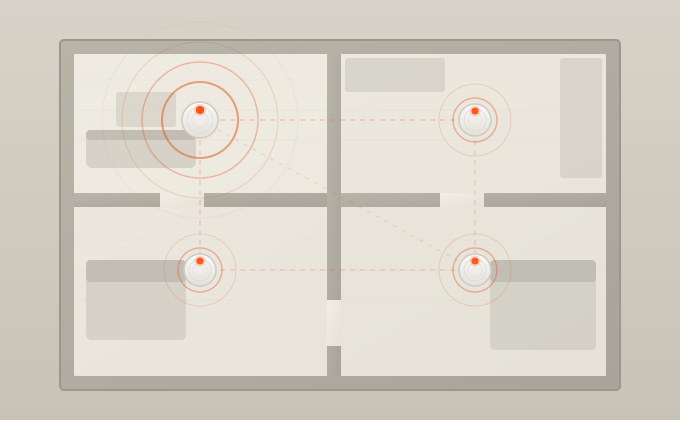
In a single-room flat, one smoke alarm going off is hard to miss. In a large two-storey home with bedrooms at one end and a kitchen at the other, it is a very different story. A smoke alarm activating in the garage while occupants are asleep upstairs with doors closed may not be heard in time.
This is the problem that interconnected smoke alarms are designed to solve. When one alarm detects smoke or heat, every alarm in the system sounds simultaneously. Every occupant in every part of the home is alerted at the same moment, regardless of where the fire starts.
What Is Wireless Interconnection?
In a traditional hardwired interconnected system, alarms are physically linked by cabling run through walls and ceilings. When one activates, the signal travels through the wiring to trigger the others.
Wireless interconnection achieves the same result without cabling. Alarms communicate with each other via radio frequency (RF) signals. Each alarm in the system is paired to the others during setup. When one alarm triggers, it broadcasts a signal that causes every paired alarm to sound within seconds.
This is particularly valuable in existing homes where running new cabling is impractical or cost-prohibitive. Our wireless interconnected smoke alarms allows full home interconnection to be achieved without any electrical work, using battery-operated units that pair together out of the box.
Why Larger Homes Need Interconnection
The time between a fire starting and it becoming unsurvivable can be measured in minutes. Early warning is the single most important factor in a successful evacuation. In a larger home, the distance between the alarm and the occupant is the critical variable.
Consider these scenarios:
A fire starts in the garage at 2am. Occupants are asleep in upstairs bedrooms with doors closed. A standalone garage alarm activates, but the sound does not carry. In an interconnected system, every bedroom alarm also sounds.
- A slow-smouldering fire starts in a ground-floor laundry. An interconnected heat alarm triggers the entire system, waking occupants on the upper level before smoke reaches their floor.
- A multi-generational home has an elderly occupant in a self-contained wing. Interconnection ensures they receive the same alert simultaneously as everyone else in the property.
In each of these cases, interconnection does not just provide slightly more warning. It can be the difference between a successful evacuation and a tragedy.
NZ Building Code Requirements for Interconnection
Under NZS 4514:2021, all smoke alarms installed in newly built homes and homes undergoing consented renovation work must be interconnected. This requirement was introduced specifically to address the problem of alarms failing to alert occupants in other parts of the home. Full details are available on our NZ Building Code page.
For existing homes not undergoing renovation, interconnection is not currently mandated, but it is strongly recommended, particularly for homes with two or more levels, long hallways, or self-contained rooms.
For rental properties, landlords should be aware that the interconnection requirement applies to any renovation work requiring a building consent. Proactively upgrading to an interconnected system is both a practical safety improvement and a way to get ahead of potential future compliance requirements.
How Many Alarms Do You Need?
The number of alarms required depends on the size and layout of your home. As a general guide under NZS 4514:2021:
At minimum, one alarm on each level of the home
- One alarm in each bedroom or within 3 metres of each bedroom door
- One alarm in each living area
- A heat alarm (rather than a smoke alarm) in the kitchen, garage, and laundry
- Alarms in hallways that connect sleeping areas to living areas
For a detailed breakdown by home size and layout, our article on how many smoke alarms you need in your home covers this in full.
Combining Smoke and Heat Alarms in One Wireless System
One of the most practical advantages of a wireless interconnected system is that smoke alarms and heat alarms can be combined into a single network. This is important because the right alarm type varies by room.
In a CAVIUS wireless system, battery-operated smoke alarms, mains-powered smoke alarms, and heat alarms all pair within the same RF network. A heat alarm activating in the kitchen will trigger every smoke alarm in the bedrooms, hallways, and living areas simultaneously.
This is whole-home protection working as it should. You can explore compatible wireless heat alarms alongside our smoke alarm range, with up to 50 devices supported within a single CAVIUS wireless network.
Installation: What Is Involved?
For battery-operated wireless alarms, installation is straightforward and does not require an electrician. Each alarm mounts to the ceiling using the provided bracket and screws. Pairing is completed by following the manufacturer’s instructions, typically involving a button sequence that links alarms within the same frequency group.
Key installation considerations:
- Alarms must be within RF range of at least one other alarm in the network (typically 15 to 30 metres depending on wall construction)
- In very large homes or properties with thick concrete or brick walls, a daisy-chain layout helps ensure signal reliability
- Always test the full network after installation by activating the test button on each alarm in turn and confirming all others respond
- Register your alarms for warranty and keep a record of installation dates for replacement planning
For mains-powered alarms, a licensed electrician is required to connect the unit to the home’s wiring. The wireless interconnection itself is still handled by RF, so no additional cabling between alarms is needed.
Key Takeaways
For larger homes, multi-level properties, and rental properties, wireless interconnection is one of the most impactful upgrades available. The core benefits are:
• Every occupant is alerted simultaneously regardless of where the fire starts
• No cabling required, making it practical for existing homes
• Smoke and heat alarms operate within a single network for full-room coverage
• Meets the interconnection requirements of NZS 4514:2021 for new builds and consented renovations
• Up to 50 devices supported within a single CAVIUS wireless network
A home where every alarm sounds together gives every occupant the best possible chance of a safe evacuation. It is one of the most straightforward improvements you can make to your home’s fire safety, and with wireless technology, it has never been easier to implement. To find the right combination of alarms for your home, visit our wireless interconnected smoke alarms page or speak to our team via the contact page.