
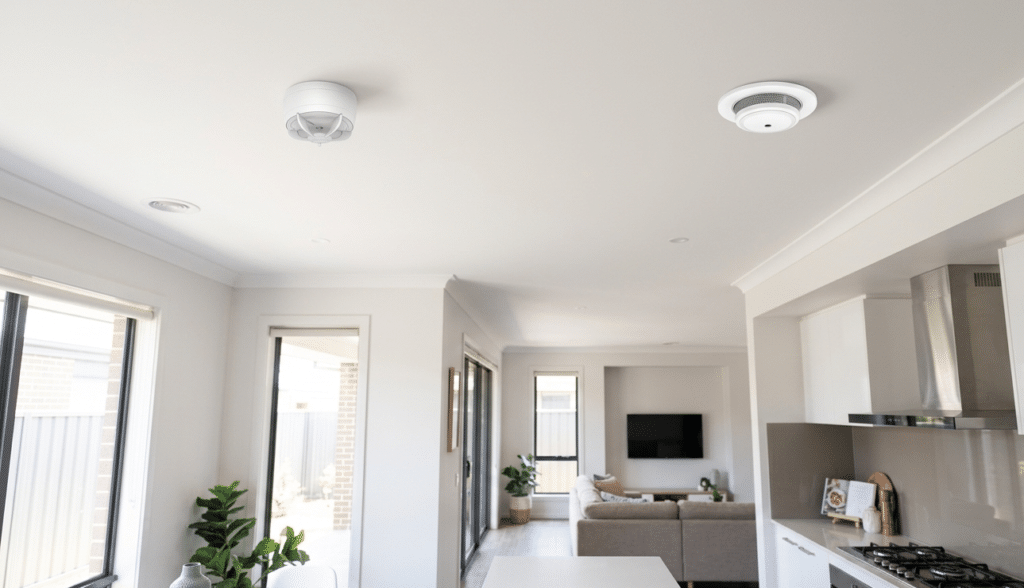
Most people know they need a smoke alarm. Fewer understand that a smoke alarm alone cannot protect every area of their home effectively. Some rooms are simply not suited to smoke detection, and installing the wrong type of alarm in those spaces can either lead to constant false triggers or, worse, leave a real fire undetected until it has already spread.
This is where heat alarms come in. Together, smoke and heat alarms provide layered protection that covers your entire home. Here is what you need to know.
How Smoke Alarms Work
Modern smoke alarms in New Zealand use photoelectric technology. A light source inside the detection chamber bounces between sensors. When smoke particles enter the chamber and scatter that light, the alarm triggers. This technology is particularly effective at detecting slow, smouldering fires, which are the most common type in residential settings. For a deeper explanation, see our article on what a photoelectric smoke alarm is and how it works.
Smoke alarms are best suited to living areas, bedrooms, hallways, and landings, where smoke from a fire is likely to reach before the fire itself does. Early detection in these spaces gives occupants maximum time to evacuate safely.
How Heat Alarms Work
Heat alarms do not detect smoke at all. They respond to one of two things: either a rapid rise in temperature (known as a rate-of-rise detector), or the room reaching a fixed temperature threshold. Neither relies on particles in the air, which means steam, cooking fumes, and humidity cannot trigger them.
This makes heat alarms highly reliable in environments where smoke alarms would produce constant false activations.
Where Each Alarm Type Belongs
Smoke alarms are appropriate in:
• All bedrooms
• Living rooms and lounge areas
• Hallways and landings
• Home offices and study rooms
• On every level of a multi-storey home
Heat alarms are the better choice in:
• Kitchens and sculleries
• Garages
• Laundries
• Workshops or utility rooms
• Any space with regular steam, grease, or airborne particles
The NZ Building Code (NZS 4514:2021) specifically recommends heat alarms for kitchens and sculleries separated by doors to reduce nuisance activations. You can read the full placement requirements on our NZ Building Code page.
Why You Cannot Rely on Smoke Alarms Alone
Consider a scenario that plays out in NZ homes regularly: a fire starts in the kitchen, triggered by unattended cooking at high heat. A smoke alarm installed in that kitchen would likely have gone off many times before from normal cooking, leading the homeowner to disable it or remove the battery. When a real fire starts, there is no alarm.
A heat alarm in the kitchen would not have triggered from cooking steam or fumes. It would, however, activate when temperatures rise to dangerous levels, alerting the household before smoke spreads into other rooms.
In an interconnected system, the kitchen heat alarm activating would also trigger every smoke alarm in the home simultaneously, giving everyone maximum time to respond. This is the case for full-coverage protection.
The Case for Wireless Interconnection
Under the updated NZ Building Code, all newly built homes and consented renovations require interconnected alarms. When one alarm activates, all alarms in the home sound together. This is particularly important in larger homes, multi-level properties, or homes where occupants may be asleep with doors closed.
Wireless interconnection removes the need for cabling between alarms. CAVIUS wireless alarms, available through our wireless interconnected range, use radio frequency to link smoke and heat alarms together in the same system. Up to 50 alarms can be connected within a single property.
For more on how wireless interconnection works, see our article Can Smoke Alarms Be Interconnected Wirelessly?
A Practical Room-by-Room Guide
Bedrooms
Smoke alarm required. One per bedroom, ceiling-mounted, interconnected with the rest of the system.
Living and dining areas
Smoke alarm required. Position centrally on the ceiling, away from kitchen cooking zones in open-plan layouts.
Hallways and landings
Smoke alarm required on each level. These are critical escape route monitoring points.
Kitchen
Heat alarm recommended, particularly where separated from living areas by a door. Our wireless heat alarms integrate directly with the CAVIUS wireless smoke alarm system.
Garage
Heat alarm recommended. Garages often contain vehicles, fuel, and chemicals that can produce fumes. A heat alarm provides reliable detection without false triggers from exhaust or dust.
Laundry
Heat alarm recommended. Steam from washing and drying cycles makes smoke alarm installation impractical.
What to Look for When Buying
When selecting alarms for your home, look for the following:
• Compliance with NZS 4514:2021 and recognised standards such as AS 3786 or BS EN 14604
• 10-year sealed battery or mains-powered options
• Wireless interconnection capability
• A hush/silence function for temporary suppression without disabling the alarm
• A clear expiry date on the unit
CAVIUS alarms, distributed by On Point Distribution, meet all of these requirements. Both battery operated smoke alarms and mains powered smoke alarms options are available, along with compatible heat alarms for full home coverage.
Key Takeaways
Smoke and heat alarms serve different but complementary purposes. For genuine whole-home protection:
• Use smoke alarms in all living spaces, bedrooms, and hallways
• Use heat alarms in kitchens, garages, laundries, and utility rooms
• Interconnect all alarms so the entire home is alerted from a single trigger point
• Choose compliant alarms with sealed 10-year batteries or mains power
Getting the balance right between smoke and heat detection is one of the most impactful things you can do for your home’s fire safety. It is not just about meeting a code requirement. It is about making sure your alarms are in the best position to protect the people inside your home.If you need help selecting the right combination of alarms for your property, visit our fire safety products page or get in touch with our team.