
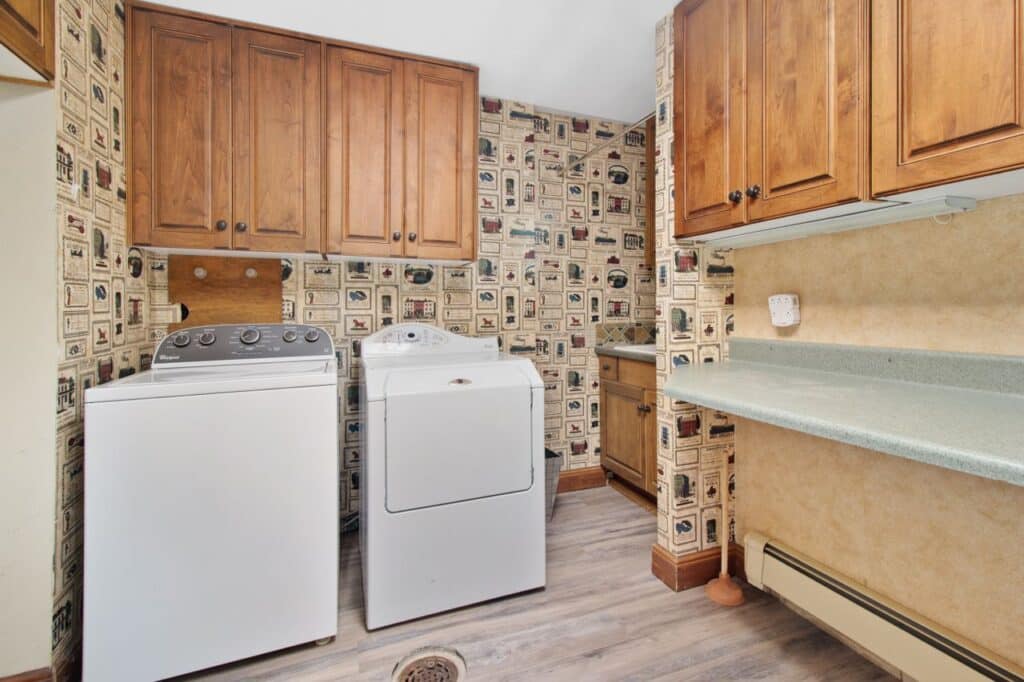
Not every room in a home is suited to the same type of alarm. Laundries, garages, and utility cupboards all generate the kind of airborne particles, steam, and fumes that regularly set off a standard smoke alarm for no real reason, and a smoke alarm that trips every time the dryer runs is an alarm most households eventually disconnect. That is the exact problem a heat alarm is designed to solve.
Why Smoke Alarms Struggle in These Spaces
Photoelectric smoke alarms, which are the standard and recommended type for most of a New Zealand home, work by detecting light scattered by smoke particles in the air. That sensitivity is a strength in bedrooms and hallways, but it becomes a liability in rooms where the air is regularly full of something that looks like smoke without any fire behind it.
- Laundries produce steam from dryers and washing machines that can trigger a smoke alarm within seconds of a cycle starting
- Garages accumulate dust, and vehicles parked or started inside generate exhaust fumes that a smoke sensor reads as a fire event
- Hot water cupboards and utility rooms often sit near heat sources that create warm, particle-heavy air without any actual danger
The predictable outcome is nuisance alarms, and the predictable response to nuisance alarms is a battery pulled out and never put back in. At that point, the household has no protection at all in a space that still carries genuine fire risk from wiring, appliances, or stored materials.
How Heat Alarms Work Differently
A heat alarm does not respond to particles in the air at all. Instead, it monitors ambient temperature and triggers when it detects a rapid rise in heat, or when the room reaches a fixed threshold, typically around 57 to 58 degrees Celsius. Steam, dust, and exhaust fumes have no effect on this kind of sensor, which means a heat alarm in a laundry or garage will sit quietly through years of normal use and still respond quickly to an actual fire.
This is why a heat alarm NZ installation is specifically recommended for these high-nuisance zones rather than treated as a downgrade from a smoke alarm. It is the correct tool for the environment, not a compromise.
Room by Room: Where Heat Alarms Belong
Laundries. Between dryer lint, steam, and detergent residue in the air, a laundry is one of the least forgiving environments for a smoke sensor. A heat alarm removes the nuisance trigger while still watching for a genuine appliance fault or electrical fault behind the machine.
Garages. Between dust, vehicle exhaust, and stored fuel or chemicals, garages carry real fire risk but are almost never suited to a standard smoke alarm. A heat alarm is the appropriate choice here, and it is worth checking our earlier piece on choosing between a heat alarm and a smoke alarm if you are deciding room by room across your whole property.
Utility rooms and hot water cupboards. These spaces often sit close to heating elements or hot water cylinders, and ambient warmth can sit above what a smoke alarm tolerates well. A heat alarm accounts for this without compromising on protection.
Kitchens. Cooking is the classic example of nuisance triggering, and while it sits slightly outside the scope of this article, the same logic applies. We cover it in more detail in our piece on whether you need a heat alarm in your kitchen.
Interconnection Still Matters
A heat alarm should not be treated as a standalone device isolated from the rest of the home’s fire protection. Under NZS 4514:2021, which now underpins the New Zealand Building Code’s Acceptable Solutions for smoke alarms, interconnection is the standard expectation for a modern home, and heat alarms fit into that same network.
A wireless interconnected heat alarm in the garage or laundry will sound every other alarm in the house the moment it detects heat, and every other alarm in the house will sound the heat alarm in return. For a sleeping household, that shared signal is what actually gets people out in time, rather than relying on a single isolated device in a room nobody is standing in at 2am.
Choosing the Right Heat Alarm
We supply the CAVIUS wireless heat alarm as part of a fully interconnected range, which means it joins the same network as CAVIUS smoke alarms already installed elsewhere in the home, with no additional wiring required. It is a straightforward retrofit for an existing laundry or garage that currently has no protection, or one that has had its smoke alarm quietly disconnected after one too many false alarms.
Our full range of wireless heat alarms is built for exactly these high-nuisance areas, and each unit is designed to sit alongside standard smoke alarms elsewhere in the home rather than replace them.
Signs You Have the Wrong Alarm in the Wrong Room
A few tells are worth checking for around your own home.
- A smoke alarm in the laundry or garage that has had its battery removed or has been unplugged
- An alarm that goes off reliably every time the dryer runs or a car is started in the garage
- No alarm at all in a garage or utility area, on the assumption that it is not a “proper” room
- A single alarm in the hallway expected to cover a laundry or garage at the other end of the house
Any one of these is worth acting on, and none of them require an electrician if you choose a wireless interconnected system.
Frequently Asked Questions
Can I just install a heat alarm instead of a smoke alarm everywhere? No. Heat alarms are the right choice for specific high-nuisance areas such as laundries, garages, and utility rooms, but they should not replace smoke alarms in bedrooms, hallways, and living areas, where a photoelectric smoke alarm remains the correct and code-required option.
Do heat alarms need to be interconnected with the rest of the house? Under NZS 4514:2021, interconnection is now the expected standard for a modern New Zealand home’s fire detection system, and a heat alarm should be part of that same network rather than isolated on its own.
Will a heat alarm still go off from everyday laundry or garage use? No. Because it responds to a genuine rise in temperature rather than airborne particles, a correctly installed heat alarm should not trigger from steam, dust, or normal engine warmth, which is exactly the problem it is designed to solve.
The Bottom Line
Laundries, garages, and utility areas are not lower priority than the rest of the home, they simply need a different kind of detector. Fitting the right alarm in the right room, and keeping it interconnected with the rest of the house, closes a gap that a lot of otherwise well-protected New Zealand homes still have.