
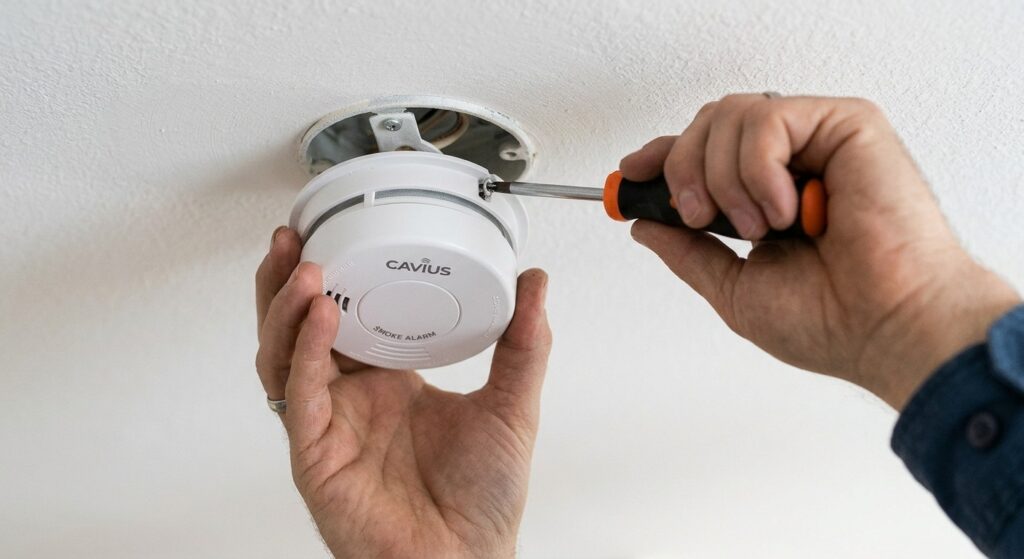
A homeowner calling to say their smoke alarm is “faulty” could mean half a dozen different things, from a flat battery to a genuine unit failure. How you handle that first call determines whether it costs you a ten-minute phone conversation or an unpaid site revisit.
Start With What the Alarm Is Actually Doing
Before assuming a unit needs replacing, it is worth getting the customer to describe the specific behaviour, since the fix is completely different depending on the answer.
A single chirp every 30 to 40 seconds almost always means a low battery warning, or in the case of a sealed 10-year battery unit, end of service life. This is the single most common smoke alarm customer complaint NZ electrician callouts involve, and it rarely needs a site visit to resolve.
Repeated nuisance triggering during cooking or showering usually points to the wrong alarm type for that specific location, rather than a fault. A photoelectric smoke alarm in a steam-heavy bathroom or a kitchen without a heat alarm nearby will do this reliably.
One alarm not sounding when another unit triggers suggests an interconnection fault rather than a problem with the individual unit, which is a different diagnostic path entirely from a standalone fault.
Total silence during a test is the clearest case for a genuine unit fault or end-of-life replacement, and the one scenario most likely to need an actual visit or replacement unit.
A Quick Phone Diagnostic Before Booking a Site Visit
- Ask for the manufacture date on the back of the unit, which immediately rules in or out an end-of-life issue
- Ask whether the behaviour is a chirp, a full alarm, or no sound at all, since these point to different causes
- Ask whether it happens at a specific time or during a specific activity, which often points to the wrong alarm type for that room rather than a fault
- Ask whether other alarms in the home are interconnected and whether they are also affected
In a large share of cases, this diagnostic alone resolves the call without a visit, either because the fix is a battery or because the explanation itself satisfies the customer.
When It Genuinely Needs Replacing
If the unit is confirmed faulty or at end of life, a straightforward swap is usually the right call rather than attempting a repair on a sealed unit. This is also the point where warranty coverage becomes relevant, and where handling it yourself starts to cost real time out of a billable day.
Letting InTouch Take the Call Next Time
This is exactly the scenario our InTouch programme exists for. Once an installation is registered with InTouch, a complaint call like this goes to our support team directly rather than landing back on your phone. We handle the diagnostic conversation, confirm whether a replacement is needed under warranty, and manage it from there.
Our InTouch warranty programme page covers registration, and for installers who have not used it yet, this kind of fault call is the clearest example of the time it saves.
Why the Phone Diagnostic Matters for Your Business
A callback booked without this quick diagnostic often turns into a wasted trip. If the real issue is a low battery warning or the wrong alarm type for a steamy bathroom, a site visit does not actually fix the underlying cause unless it is identified first. Running through the four questions above before booking anything means the visits that do go ahead are the ones that genuinely need a trade on site, rather than a conversation that could have happened over the phone.
Frequently Asked Questions
What if the customer insists on a site visit regardless of what the phone diagnostic suggests?
That is a reasonable call to make, particularly for a customer who is anxious about fire safety. The diagnostic simply helps you arrive prepared, with the likely cause and fix already identified.
Does registering with InTouch cost the customer anything?
No. InTouch registration is handled between us and the installer, and the ongoing support is part of the warranty coverage the homeowner already has on their CAVIUS units.
Can InTouch help with a complaint about a non-CAVIUS alarm?
InTouch is built around our CAVIUS range specifically, so support applies to installations using those units.
The Bottom Line
Most “faulty alarm” complaints are a battery, a mismatched alarm type, or an interconnection issue rather than a genuine unit failure, and a short phone diagnostic resolves the majority of them without a visit. For the ones that do need a replacement, registering installs with InTouch means that call comes to us next time, not you.